
Public Courses
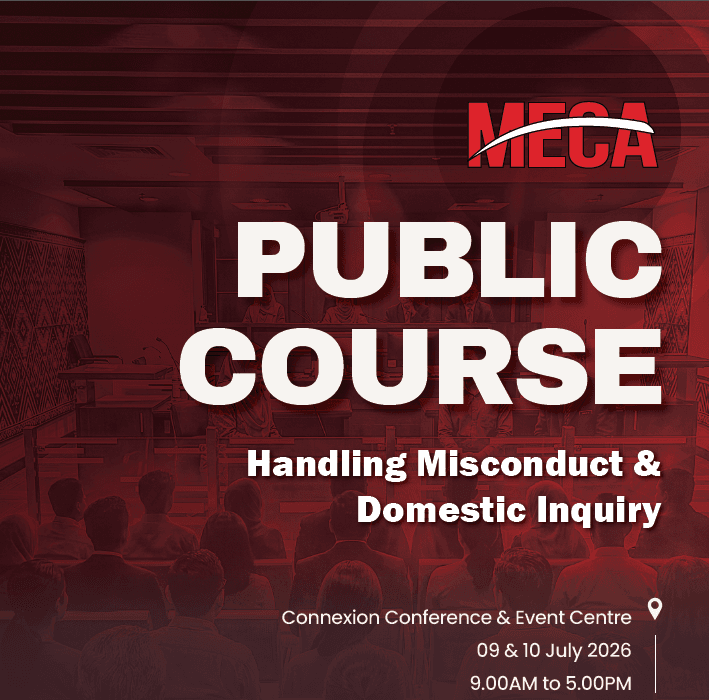
Handling Misconduct & Domestic Inquiry
Handling Misconduct & Domestic Inquiry
Workplace misconduct is one of the most common and high-risk areas employers face. While many cases may appear straightforward on the surface, the way misconduct is handled, particularly the process leading to disciplinary action, often determines whether a decision can be defended if challenged.
In practice, employers do not get into difficulty because misconduct did not occur. They get into difficulty because the process was flawed, inconsistent, or poorly documented.
This programme is designed to equip employers with a clear, structured, and defensible approach to managing misconduct and conducting domestic inquiries. Participants will learn not only what to do at each stage of the disciplinary process, but also how to ensure decisions are made fairly, consistently, and in line with legal expectations.
Course objective
By the end of this course, participants will be able to:
- Understand the principles of employee discipline and due process
- Identify and classify different types of employee misconduct
- Conduct fair and procedurally sound domestic inquiries
- Prepare and maintain proper documentation throughout disciplinary proceedings
- Make informed and defensible disciplinary decisions that comply with labour laws
MODULES
1. Introduction to Employee Discipline
- Concept and importance of workplace discipline
- Objectives of disciplinary action: correction vs punishment
- Legal and ethical considerations in discipline
- Principles of natural justice (“no one should be condemned unheard”)
2. Understanding Misconduct
- Definition and classification of misconduct
- Minor vs major misconduct
- Common examples: absenteeism, insubordination, negligence, theft, harassment, etc.
- Misconduct vs poor performance – distinguishing factors
- Common causes and preventive approaches
3. Legal Framework Governing Misconduct and Discipline
- Relevant provisions under local Labour / Employment Law (e.g., Employment Act, Labour Relations Act, Industrial Relations Act)
- Employee rights and employer obligations
- Procedural vs substantive fairness
- Case law examples and best practices
4. Handling Misconduct – Step-by-Step Procedure
- Detection of Misconduct (observation or report)
- Preliminary Investigation – fact-finding before formal action
- Show Cause Letter / Notice of Allegation – drafting and issuance
- Employee’s Written Explanation – assessing adequacy of response
- Decision to Proceed with Inquiry – when explanation is unsatisfactory
5. Conducting a Domestic Inquiry (DI)
- Purpose and role of a domestic inquiry
- Composition of the Inquiry Panel / Disciplinary Committee
- Roles and responsibilities:
- Inquiry officer / chairman
- Presenting officer
- Employee and representative
- Procedural Steps in a Domestic Inquiry:
- Serving of charge sheet
- Opening of inquiry and reading of charges
- Presentation of evidence by management
- Cross-examination by the employee or representative
- Employee’s defence and presentation of witnesses
- Closing submissions
- Panel deliberation and findings
6. Rules of Evidence and Fair Procedure
- Admissibility of documents and witness testimonies
- Burden and standard of proof in internal inquiries (“balance of probabilities”)
- Ensuring impartiality and avoiding bias
- Record-keeping and minutes of proceedings
7. Decision-Making and Disciplinary Action
- Evaluating findings and evidence
- Determining appropriate disciplinary penalties (verbal warning, suspension, demotion, dismissal, etc.)
- Factors to consider: gravity of offense, employee record, mitigating circumstances
- Writing the Decision Letter / Notice of Dismissal
8. Post-Inquiry Processes
- Communicating the outcome to the employee
- Handling appeals or reviews within the organization
- Implementing corrective and preventive measures
- Managing employee morale and avoiding victimisation claims
9. Documentation and Record Management
- Proper documentation of disciplinary proceedings
- Confidentiality and data protection considerations
- Maintaining inquiry reports and evidence for legal compliance
10. Practical Workshop / Simulation
- Case studies based on real workplace scenarios
- Role-play: Conducting a mock domestic inquiry
- Drafting exercises: Show-cause letter, charge sheet, and decision letter
- Group discussion and feedback session
Handling Misconduct & Domestic Inquiry
This course equips employers with a clear, structured, and defensible approach to managing workplace misconduct and conducting domestic inquiries. Participants will learn not just what to do at each stage of the disciplinary process, but how to ensure actions are fair, consistent, properly documented, and aligned with legal expectations to avoid costly challenges.
Simplify Your Industrial Relations and
Employment Law Operations
Fill this form and our experts will reach out to you.